

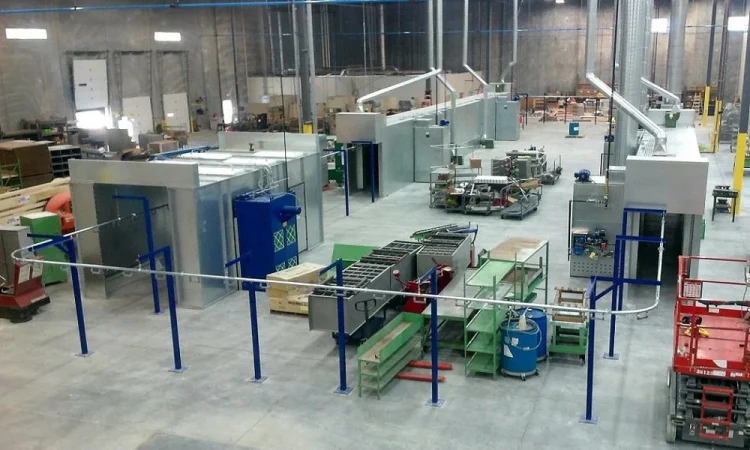

Production needs can differ sharply between a shop making electrical cabinets and one building agricultural frames, yet both may depend on durable, repeatable finishes. Different part sizes, metal thicknesses, volumes, and appearance standards determine what type of powder coating equipment makes sense on the floor. Matching the finishing line to the products being made helps manufacturers gain useful capacity without paying for features their work never requires.
Sheet Metal Manufacturers Need Repeatable Finishes Across Large Part Counts
Sheet-metal operations often coat panels, housings, cabinets, brackets, and assemblies in batches where small finish differences become obvious once parts reach final assembly. Enclosures made from light-gauge steel can heat quickly, so application consistency, rack spacing, and controlled cure timing matter when hundreds of similar pieces move through production.
Reliable Reliant powder coating systems can support this type of work by keeping booth and oven capacity aligned with recurring batch sizes. Standardized settings for film build, grounding, color, and cure time also help manufacturers repeat successful results when the same product returns week after week.
Agricultural and Heavy Equipment Builders Put More Demand on the Oven
Agricultural equipment manufacturers often work with thick plate, welded frames, guards, implements, and components built to tolerate outdoor use and hard service. Frames with heavy crossmembers can take much longer to reach cure temperature than thin covers attached to the same product, making thermal load an important equipment consideration.
Heavy fabrication may justify a Reliant industrial powder coating oven with the chamber size, heating capacity, and airflow needed for dense assemblies. Specifying the oven around batch weight as well as physical dimensions helps businesses avoid a situation where large products fit inside but take so long to heat that curing limits daily output.
Metal Furniture and Outdoor Product Makers Balance Appearance With Durability
Furniture manufacturers deal with visible surfaces that make coating defects difficult to hide. Outdoor tables, seating, railings, shelving, and similar products may also include tubing, weld joints, corners, and recessed areas that require controlled application to maintain even coverage.
Exterior products place added emphasis on suitable powder chemistry, pretreatment, and complete curing. Coordinated Reliant powder coating equipment can help these shops manage spraying and heating as connected steps rather than expecting the oven to correct uneven application later.
Color-sensitive production benefits from equipment that can support organized changeovers without excessive cleanup time. Buyers considering a Reliant powder coating equipment package can plan booth filtration, application equipment, racks, and curing space around the range of colors and product sizes they expect to handle.
Automotive and Transportation Suppliers Depend on Process Repeatability
Automotive suppliers may coat brackets, frames, wheels, suspension components, housings, and other metal parts that need a consistent finish from batch to batch. Brackets with bends, holes, recessed areas, and welded features can create application challenges that make grounding and gun settings especially important.
Repeatable Reliant powder coating ovens give manufacturers a controlled curing stage after those application variables are addressed. Consistent process records for part temperature, dwell time, film thickness, and load configuration can also make it easier to identify why a particular run differs from the established standard.
Custom Fabricators Benefit From Equipment That Handles Frequent Change
Job shops seldom enjoy the luxury of running one shape, color, or batch size all day. Short-run work can shift from small brackets to fabricated frames within hours, so rigid equipment configurations may create more downtime than they save.
Flexible Reliant powder coating equipment for sale can suit manufacturers that need batch capability without designing the whole department around one product family. Batch layouts let crews change rack arrangements, color schedules, and cure recipes as orders move through the shop.
Machinery and Industrial Equipment Makers Often Need Extra Chamber Space
Machinery manufacturers often produce guards, bases, frames, housings, carts, structural members, and fabricated assemblies that vary widely in both shape and weight. Large components may require powder coating equipment with enough working clearance around racks and doors so operators can load parts without damaging coated surfaces or restricting the airflow needed for even heating.
Oversized work also changes how manufacturers should evaluate a Reliant powder coating oven for sale because chamber volume alone does not determine useful curing capacity. Heating performance, door-open time, insulation, airflow, and the amount of cold steel entering each cycle all affect how many loads the oven can process during a shift.
Growing OEMs Can Bring More Finishing Work Under Their Own Roof
Fabricators that currently send increasing amounts of finished metal to outside coaters may eventually reach a point where transportation, queues, rush charges, and vendor schedules interfere with assembly. Growth can make internal finishing attractive because production managers gain more control over small batches, replacement parts, priority orders, and inspection timing.
Reliant powder curing ovens can give an expanding OEM the ability to develop verified cure schedules around its own recurring products instead of working within another finisher’s production calendar. Added control becomes especially useful when customer orders change quickly and coated components must return to assembly without several days of external handling.
Reliant Finishing Systems is relevant to manufacturers whose workloads do not fit one narrow production profile, from light sheet-metal parts to bulky welded equipment. Its booths, ovens, and package configurations give different types of plants a way to build finishing around the products they actually make, whether that means frequent batch changes, large thermal loads, repeat OEM work, or a growing volume of parts that no longer makes sense to send elsewhere.