

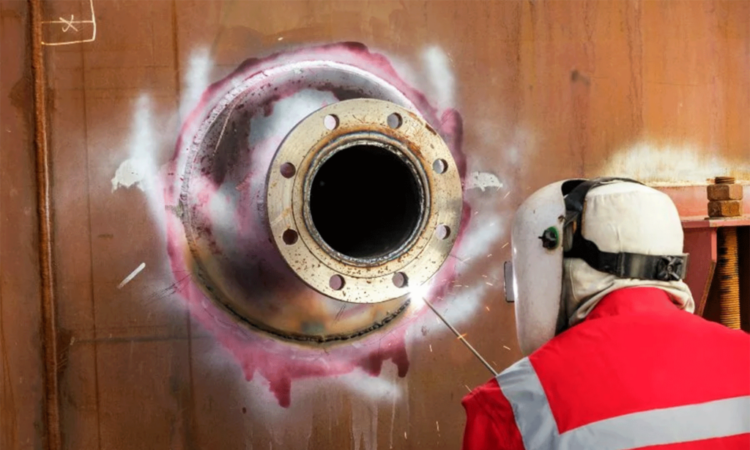

In dye penetrant testing (DPT), a liquid infiltrate is applied to a material’s exterior. It is permitted to get into any flaws or cracks. And then, the penetrant is drawn back to the surface using a developer.
In this way, it can be seen under the right lighting. By using this method, inspectors can spot possible problems with the material’s exterior. Also, they can find any flaws that would need upkeep. Let’s find out more about dye penetrant testing employed in gas turbines.
DPT Principles
Capillary action, wherein a liquid infiltrates into surface-breaking defects, is the foundation of DPT. The following are the main DPT steps:
- Preparing the Surface
The outermost layer of the material you intend to test is meticulously cleaned by technicians. This is to get rid of any impurities. Such as paint, grease, or dirt that can prevent the penetrant from penetrating.
- Application
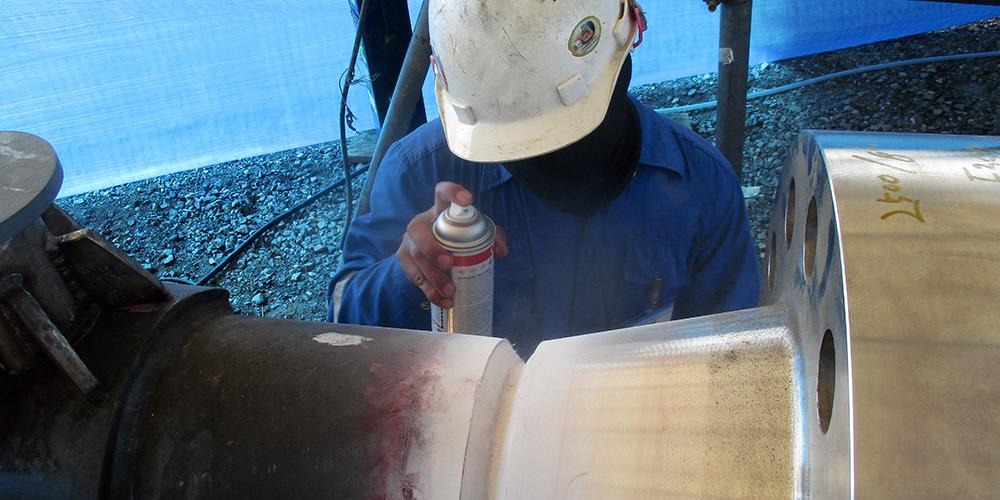
Using a brush, spray, or immersion technique, technicians administer DPT to the material’s external finish. To ensure that it penetrates any faults. They let it remain on the peripheral for a predetermined amount of time, known as dwell time.
- Removal of Excess Infiltrate
Only the penetration agent that has seeped into faults remains after testers carefully remove the penetrant from the peripheral.
- The Developer
To extract the penetrant from flaws and produce a visible signal. Inspectors use this on the periphery. By drawing the penetration agent to the outer layer and dispersing it to create a visible mark. This functions as a blotter.
- Examination
To find and assess the signs of flaws, inspectors look at the external under the proper illumination circumstances. Such as visible and ultraviolet light over FPIs – click https://www.nde-ed.org/NDETechniques/PenetrantTest/PTMaterials/ptmaterials.xhtml# for more details.
- After Cleaning
Following the examination, the material is cleaned by inspectors. The ones who removed the developer, as well as any leftover infiltratory. This is to restore the exterior to its initial condition.
Advantages
- Extremely sensitive: It is useful for identifying tiny cracks along with various discontinuities. That’s because it is extremely sensitive to surface-breaking flaws.
- Versatility: Can be applied to a variety of non-porous materials, such as composites, metals, ceramics, and plastics.
- Cost-effective: It is a cost-effective option for many applications because it is typically more affordable than other NDT techniques.
- Usability: It is comparatively easy to use and doesn’t require complicated equipment. Thus, making checks quick and uncomplicated.
Types
DPT includes several methods, each suited to particular applications and inspection requirements. These techniques differ according to the application.
- Visible Dye
A technique that finds surface-breaking flaws using visible (non-fluorescent) infiltrates.
- After applying the penetrated substance to the exterior and letting it settle, the inspector removes it. Under typical lighting conditions, a developer is used to extract the trenchant from flaws, producing visual signals.
- Appropriate for general-purpose inspections in well-lit settings. Like routine maintenance as well as control in manufacturing, when great sensitivity is not necessary.
- Fluorescent Dye
A technique that provides high-contrast warnings under ultraviolet (UV) light. By using fluorescent infiltrates to find surface-breaking defects – find out more info.
- The FPI is applied to the exterior by inspectors, who then let it settle before removing it. After that, they use a developer to extract the infiltrator from errors.
- Following these procedures, the exterior is examined under UV light. This causes the trenchant errors to shine brightly and highlight any indications.
- High-sensitivity inspections in low-light conditions, such as in important structural components, automotive, and aerospace, where it is essential to find even the smallest errors.
- Water-Washable
This kind of DPT allows the extra infiltrate to be removed from the surface with water.
- After applying the water-washable penetration product to the exterior, inspectors let it settle. Following the remaining time, they rinse off any extra infiltrate with water. They use a developer to extract the infiltrator from faults. Thus, they make visible signs and then conduct their examination.
- Frequently utilized in manufacturing as well as maintenance activities. It is appropriate for inspections when removal ease is crucial.
- Post-Emulsifiable
An emulsifier is needed to make it water-washable in a post-emulsifiable procedure.
- After applying the DPT, technicians let it settle. It is then transformed into a form that can be washed with water. This is achieved by applying an emulsifier onto the exterior. They use a developer to highlight flaws and carry out their inspection after washing off the emulsified trenchant.
- Perfect for high-sensitivity inspections, such as those in precision engineering and aerospace, where regulated removal of penetration compounds is required.
- Solvent-Removable
- After applying this to the surface, inspectors let it stay there. After that, they use a solvent cleaner to remove the extra trenchant. They apply a developer to extract the trenchant from flaws and provide visual indications. And then, conduct the inspection.
- Frequently employed in the inspection and upkeep of huge structures. It is appropriate for outdoor inspections and circumstances when water is not easily accessible.