
How to Choose the Right Enclosed Cargo Trailer for Your Business or Hobby | Grizzly Trailer Sales

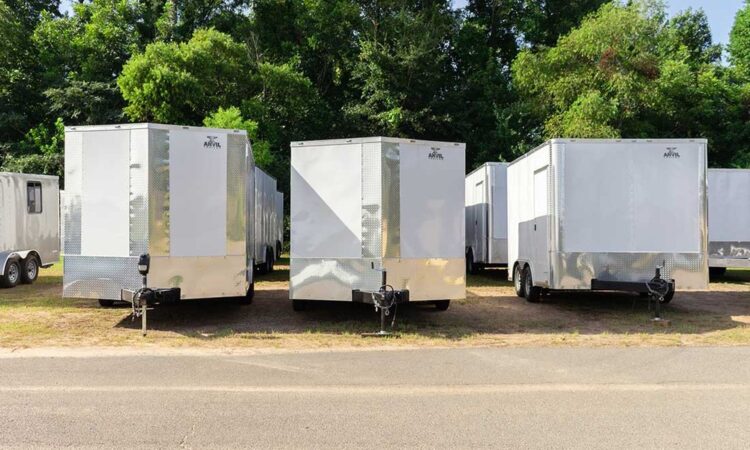

By Grizzly Trailer Sales | Trailer Buying Guides | Serving Rupert & Montpelier, ID
Enclosed cargo trailers look similar from the outside. Same boxy shape, same rear ramp door, same basic idea. But spend ten minutes comparing specs and the differences add up fast. GVWR ratings, axle configurations, interior dimensions, and construction quality all vary enough to make the wrong choice genuinely frustrating to live with. At Grizzly Trailer Sales, we carry the Pace American lineup specifically because it gives buyers in Idaho real options across different sizes and load requirements. Here’s how to work through the decision.
Start With What You’re Actually Carrying
Before any spec comparison makes sense, you need a realistic picture of your typical load. Not the heaviest load you can imagine, but the load you’ll run most often.
A mobile dog groomer has different needs than a landscaping crew. A motocross racer hauling two bikes is in a different category than a craft vendor moving display shelving and product inventory. The trailer that works for a weekend camper with a side-by-side isn’t the same one a mobile welding operation needs.
Write down the rough weight of your gear, the floor space you need, and whether height is a factor. Some cargo sits flat and low. Other loads, like tall display racks, ladders, or upright equipment, need clearance. Getting those numbers before you shop puts everything else in context.
Single Axle vs. Tandem Axle: More Than Just Weight Capacity
The axle question comes up in almost every enclosed trailer conversation. The common answer is that tandem axles carry more weight, which is true. But that’s not the whole picture.
Single axle trailers, typically rated up to around 3,500 lbs GVWR, are lighter to tow, easier to maneuver in tight spaces, and cost less to buy and maintain. If you’re running loads under 2,000 lbs and primarily using the trailer for one type of cargo, a single axle in the right size is often the better fit. The 6×12 single axle is one of the most practical enclosed trailer sizes sold, and it tows behind nearly any half-ton truck or even a capable SUV.
Tandem axle trailers, which commonly run from 7,000 to 9,900 lbs GVWR in the enclosed cargo category, add stability at highway speeds, provide redundancy if a tire fails, and spread load weight across more contact points. They’re the right call for heavier loads, longer hauls, or trailers that will carry equipment that shifts during transit.
One thing buyers often overlook: tandem axles don’t turn as tightly. If your job site or storage location involves backing into a narrow space regularly, that turning radius matters day to day.
Understanding GVWR and Why Payload Math Is Worth Doing
GVWR stands for Gross Vehicle Weight Rating, and it represents the maximum loaded weight the trailer is rated to handle, including the trailer itself. Subtract the trailer’s empty weight from the GVWR and you get the payload capacity, meaning what you can actually put in it.
A 7,000 lb GVWR enclosed trailer might weigh 2,200 lbs empty. That leaves 4,800 lbs of usable payload. If you’re loading 4,500 lbs of equipment regularly, you’re cutting it close enough that you should consider moving up to a higher GVWR rating. Running a trailer consistently at or near its limit accelerates wear on the axles, tires, and frame.
The Pace American trailers at Grizzly Trailer Sales range from light single-axle units in the 2,990 lb GVWR range up to tandem configurations around 9,900 lbs. Knowing which bracket you fall into before you look at floor plans makes the selection process much cleaner.
Interior Height: The Spec That Gets Ignored Until It Matters
Standard interior height on enclosed cargo trailers is typically around 66 to 72 inches. That’s enough for most cargo, and it keeps the trailer profile low enough to reduce wind drag. For some buyers, it’s plenty.
For others, it’s a problem they discover on delivery day. If you’re hauling motorcycles with risers or ape hangers, moving furniture, transporting portable display walls, or working inside the trailer regularly during shows or events, you want to know exactly how much headroom you have.
Some enclosed trailer lines offer an additional height option that brings interior clearance up to around 78 inches or more. If you’re on the fence, err toward more height. A trailer that’s slightly taller than necessary is far less frustrating than one you’re ducking inside every time you load it.
Doors, Vents, and Security Features Worth Paying Attention To
Rear ramp doors are standard on most enclosed cargo trailers and are what most buyers want. They fold down to create a loading surface and lock when closed. Check the ramp length and angle, because a steep ramp makes loading heavy or wheeled equipment harder and potentially dangerous.
Side doors add serious convenience if you need access to cargo without opening the full rear. For vendors, mobile service operators, or anyone who needs to grab specific items quickly, a side door saves real time.
On security, the standard locking hardware on most enclosed trailers is adequate for everyday use but not particularly resistant to a determined theft attempt. Aftermarket coupler locks, hitch pin locks, and tongue locks add meaningful deterrence. If the trailer will sit parked at a job site or event overnight, that’s worth thinking through before you need it.
Venting is another detail that matters depending on use. A trailer left in the sun all day in an Idaho summer builds heat fast. Roof vents help with that, and they also reduce condensation on loads that are sensitive to moisture.
Construction Quality: What Separates Trailers That Last
Enclosed trailer frames are built from either aluminum or steel. Aluminum frames are lighter and naturally resistant to rust. Steel frames are heavier but can be more cost-effective at higher weight ratings and are easier to repair with common shop equipment.
Skin panels on the exterior are typically aluminum regardless of frame material. Look at the quality of the corner trim, the seam sealing, and how the roof panel is attached. Poorly sealed seams let water in, which damages flooring and anything stored inside.
Floor material matters too. Most enclosed trailers use treated wood decking, which holds fasteners well and provides decent grip. Inspect the floor thickness and attachment points. A floor that flexes noticeably when loaded is a sign of lighter construction.
See the Pace American Lineup at Grizzly Trailer Sales
Pace American builds enclosed cargo trailers across a range of sizes and configurations, and Grizzly Trailer Sales stocks both single and tandem axle units at our Rupert and Montpelier locations. Whether you need a compact 6×12 for weekend use or a larger tandem unit for a business that runs hard miles, there are options on the lot worth seeing in person.
Dimensions, GVWR ratings, and floor plans read differently once you’re standing inside the trailer. Stop by either location, browse the current enclosed trailer inventory on our website, or call our Rupert office at 208-678-2981. We can tell you what’s in stock and help you match the right size and configuration to what you’re hauling.