


A mattress, built for comfort, becomes a stubborn environmental burden once it’s tossed. The debate over what to do with old mattresses is heating up, and for good reason. Every year, millions of discarded mattresses pile up, but does recycling them truly outsmart simply sending them to landfill?
The Mattress Waste Crisis: Scale and Impact
Across the world, the numbers are staggering. Every year, millions of mattresses are disposed of, with many ending up buried in landfills. In Canada alone, large cities like Toronto and Montreal wrestle with mattress mountains, while globally, the total climbs into the tens of millions. These are not small, inconspicuous items. Each mattress, stacked end-to-end, would stretch for miles.
Mattresses are notorious for hogging space in landfills, and the problem is more than just volume. Their complex construction creates a serious challenge for waste management, all while their numbers keep growing with a rising global population and increased consumer turnover.
Environmental Consequences of Landfilling Mattresses
The true cost of landfilling mattresses hides beneath the surface. Mattresses can take decades to break down. Their bulky form is a logistical nightmare, quickly filling landfill capacity and pushing facilities to their limits. Worse, as they slowly degrade, mattresses release toxic substances, foams, glues, flame retardants, and metals, into the soil and water. This leaching threatens ecosystems and can pose risks to human health.
Why Do Mattresses Take Decades to Break Down?
Mattresses are built to last, using tough synthetic foams, dense fabrics, and metal springs. While this durability is great for sleep, it is a nightmare for decomposition. Most landfill environments lack the air and sunlight needed to break down these materials, resulting in a long, slow disintegration process that can take 80 to 120 years.
Traditional Landfilling: Convenience at What Cost?
Landfilling seems easy and cheap, but hidden costs add up. The process involves hauling mattresses to landfill sites, compacting them (sometimes unsuccessfully), and burying them in valuable real estate. This uses up land that could be better purposed for agriculture, recreation, or wildlife habitat.
Space Consumption and Land Use Issues
A single mattress occupies up to 40 cubic feet. Multiply that by millions, and the picture becomes clear: mattresses crowd landfills, creating space shortages and forcing municipalities to open new sites sooner. Urban areas, already tight on space, feel the pinch most acutely.
Toxic Materials and Their Long-Term Effects
Mattresses are not just space hogs; they are environmental troublemakers. As they decompose, the chemicals used in their construction seep out. Over time, these substances can enter groundwater, harming plants, animals, and people. Flame retardants and plastics have particularly long-lasting impacts.
Mattress Recycling: An Emerging Sustainable Solution
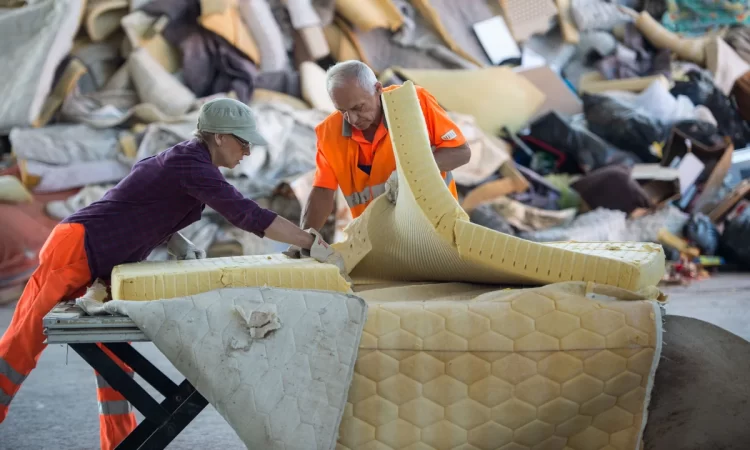
As waste piles up, innovative solutions are gaining ground. Mattress recycling programs are now available in many regions, aiming to recover valuable materials and cut landfill use. The process starts by dismantling each mattress, separating steel springs, wood, foam, and fabric for reuse in new products.
Innovations by Leaders Like Recyc-Matelas
Pioneers in the field, such as Recyc-Matelas mattress recycling, have shown that large-scale solutions are both possible and practical. With over four million mattresses recycled so far, they’ve diverted a massive volume from landfills in Quebec, Ontario, Toronto, and Montreal. Their approach combines manual and mechanical separation with strict quality controls, ensuring clean feedstocks for manufacturing.
Volume of Mattresses Recycled vs. Landfilled
Despite progress, recycling rates lag behind landfill rates. For perspective:
| Location | Mattresses Recycled (2023) | Mattresses Landfilled (2023) |
|—————|—————————|——————————|
| Canada | 500,000+ | 1,500,000+ |
| United States | 1,800,000+ | 15,000,000+ |
| Europe | 3,000,000+ | 7,000,000+ |
Environmental Benefits of Recycling Mattresses
When mattresses are recycled, the rewards are tangible. Recovery of steel, foam, and fibers means less mining, drilling, and harvesting. Recycled steel springs become construction materials or new products, foam is cleaned and repurposed for carpet padding, and fabric finds new life in insulation materials.
Recycling also slashes greenhouse gas emissions. By keeping mattresses out of landfills, methane and other gases produced by anaerobic decomposition are dramatically reduced. Finally, recycling relieves pressure on landfills, freeing up space and reducing the risk of leaks and contamination.
Economic and Social Dimensions of Mattress Recycling
Recycling mattresses is not just green, it’s also good for the economy. These programs create jobs, dismantling, sorting, transporting, and processing each mattress requires skilled labor. Growth in recycling facilities often leads to neighborhood revitalization and new small businesses in logistics and manufacturing.
From a cost perspective, recycling programs have upfront investments, but can be cheaper in the long run than expanding landfills or cleaning contaminated sites. However, lack of public awareness and inconsistent regulations can slow participation, and some communities still view recycling as inconvenient.
Obstacles and Limitations in Mattress Recycling
The road to full-scale mattress recycling is not without its bumps. Infrastructure is lacking in many regions, making it hard for people to access recycling facilities. Contamination of materials (like bedbugs or moisture) can lower the quality of recyclables. Finally, differing regional standards and slow policy adaptation hamper widespread adoption.
Making the Smarter Choice: Recycling Over Landfilling
The long-term payoff of recycling mattresses is clear: healthier environments, economic growth, and less strain on our landfills. Consumers can help by seeking out mattress recycling drop-off locations, advocating for more local recycling options, and supporting brands that design for recyclability. Governments and private companies working together can close infrastructure gaps and standardize recycling systems to make the smarter choice the easy one.
Looking Ahead: Innovations and Future Trends
The future promises even smarter solutions. Mattress manufacturers are experimenting with modular designs and single-material builds, making recycling easier. Expansion of recycling networks across North America is underway, with more regions adopting producer responsibility laws. Ultimately, the mattress industry could join the circular economy, where every old mattress becomes the raw material for something new.
The next time your mattress wears out, consider the legacy you leave behind. Recycling is not just the smarter choice, it’s the responsible one.