

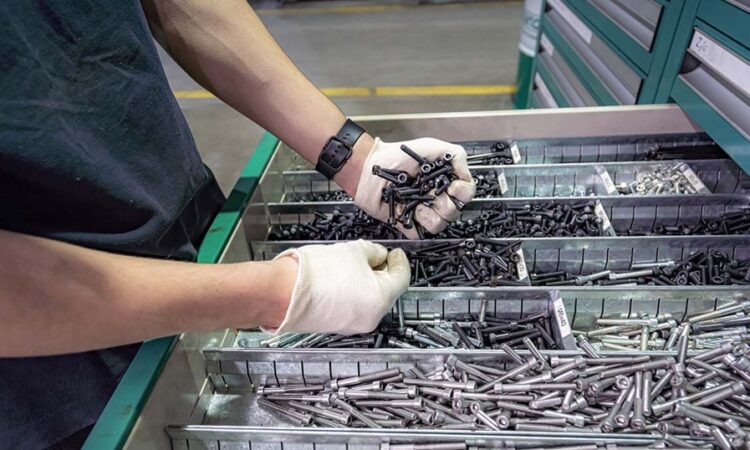

Metal injection molding emerged from the convergence of two ancient human pursuits: the art of metalworking and the science of shaping materials through moulds. This manufacturing process, though perfected only in recent decades, represents a solution to a problem that has vexed engineers since the industrial age began: how to produce small, intricate metal components with both geometric complexity and structural integrity at a scale that makes economic sense. The answer, as it turns out, lay in borrowing techniques from plastic manufacturing and applying them to metallic powders with remarkable results.
The history of metal injection molding traces back to the 1970s, when researchers recognised that metal powders, when mixed with polymer binders, could flow like plastics. This observation, simple in retrospect, opened possibilities that traditional metalworking methods could never achieve. Where conventional machining removed material through cutting and grinding, and casting struggled with fine details, metal injection molding built components from the molecular level upward, combining the freedom of plastic moulding with the strength of solid metal.
The Process Unveiled
The manufacturing sequence unfolds in distinct stages, each crucial to the final outcome. Metal powders, ground to particles measuring mere microns, are blended with thermoplastic binders to create a feedstock that behaves like thick clay. This mixture enters injection moulding machines where it is heated and forced into precision moulds under considerable pressure. The resulting green parts, as they are called in the industry, contain perhaps sixty per cent metal by volume, the remainder being the temporary binder.
What follows represents the true transformation. The green parts undergo a debinding process that removes most of the polymer binder, leaving behind a fragile brown part held together by residual binder and the mechanical interlocking of metal particles. These delicate components then enter sintering furnaces where, at temperatures approaching the melting point of the metal, the particles fuse together in a phenomenon that material scientists find endlessly fascinating. The component shrinks by fifteen to twenty per cent, becoming a fully dense metal part with properties that rival or exceed those of conventionally manufactured components.
Technical Capabilities and Material Options
Modern metal injection molding facilities offer capabilities that would have astonished engineers of previous generations:
- Production of components weighing from less than a gramme to over 200 grammes
- Geometric complexity including undercuts, threads, and internal features
- Wall thickness control down to 0.5 millimetres
- Dimensional tolerances within 0.3 to 0.5 per cent of nominal dimensions
- Surface finishes ranging from as-sintered to mirror-polished
- Material options spanning stainless steels, tool steels, titanium alloys, and tungsten composites
Singapore’s metal injection molding sector has distinguished itself particularly in medical and aerospace applications, where the combination of precision and material properties proves essential. Operating within stringent regulatory frameworks, these manufacturers have developed expertise that serves markets across continents.
Applications Across Industries
The medical device industry has embraced metal injection molding with particular enthusiasm. Surgical instruments, orthodontic brackets, and implantable components benefit from the process’s ability to produce complex geometries in biocompatible materials. The automotive sector employs the technology for fuel system components, turbocharger parts, and transmission elements. Consumer electronics manufacturers rely on metal injection molding for hinges, fasteners, and structural components where strength must coexist with miniaturisation.
The firearms industry, one of the earliest adopters, continues to utilise the process for trigger mechanisms and safety components where precision directly impacts performance and safety. Aerospace applications, though demanding the most rigorous qualification procedures, have grown steadily as engineers recognise that metal injection molding can produce components that traditional methods cannot match for certain geometries.
Economic Considerations and Production Volume
The economics of metal injection molding favour particular production scenarios. The process requires substantial upfront investment in tooling, making it unsuitable for prototype quantities. However, once tooling exists, the per-unit cost decreases dramatically with volume. The break-even point typically occurs somewhere between 10,000 and 50,000 components, though this varies considerably based on part complexity and material selection.
Singapore’s metal injection molding facilities have found their niche serving medium to high-volume production runs where quality standards brook no compromise. Their success illustrates how technical expertise and process control can overcome the higher labour costs that might otherwise disadvantage manufacturing in developed economies.
Quality Assurance in a Demanding Process
The multi-stage nature of metal injection molding demands vigilant quality control at each step. Feedstock preparation requires consistent mixing to ensure uniform distribution of metal particles. Injection parameters must remain stable across thousands of cycles. Debinding schedules follow precisely controlled time and temperature profiles. Sintering furnaces maintain atmospheric conditions that prevent oxidation whilst promoting proper densification.
Modern manufacturers employ statistical process control to monitor variables continuously. Coordinate measuring machines verify dimensional accuracy. Metallurgical analysis confirms density and grain structure. Non-destructive testing methods detect internal defects that visual inspection could never reveal. This layered approach to quality reflects an understanding that in manufacturing, as in human affairs, prevention proves far more effective than correction.
The Path Forward
The technology continues advancing as researchers explore new materials and refine existing processes. Developments in binder chemistry promise faster debinding cycles. Innovations in powder metallurgy enable previously impossible alloy combinations. Simulation software allows engineers to predict shrinkage and optimise part orientation before committing to expensive tooling.
As manufacturing evolves and global competition intensifies, metal injection molding occupies an increasingly important position in the industrial landscape. Its ability to produce components that combine geometric complexity with metallurgical integrity addresses needs that alternative processes cannot easily satisfy. The manufacturers who master this demanding technology, understanding both its capabilities and limitations, position themselves to serve industries where precision and performance remain non-negotiable requirements. The future belongs to those who recognise that excellence in metal injection molding derives not from single innovations but from the patient accumulation of knowledge across materials science, process engineering, and quality systems, all focused on transforming metal powder into components that meet the exacting demands of Metal injection molding.