

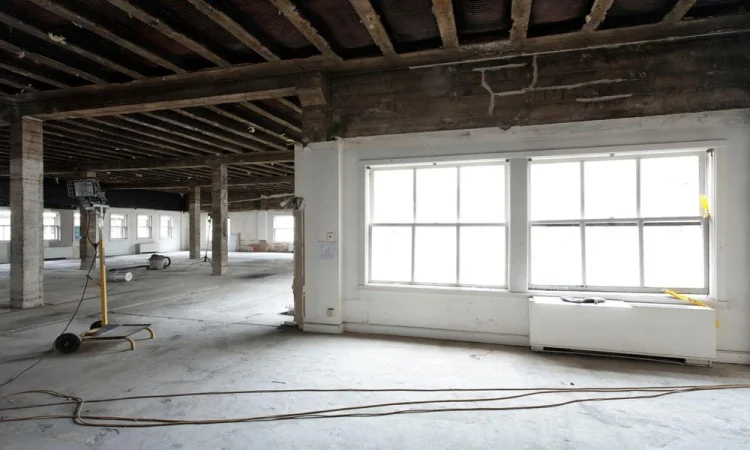

A pipe lets go over a weekend, and by Monday morning a lobby is holding water. Nobody on staff planned for it, and every hour the doors stay shut costs payroll, revenue, deliveries and the patience of customers who needed something today.
The encouraging part is how much of that outcome is still in play. Businesses that move quickly in the first hours usually reopen far sooner than the damage suggests, and often without closing entirely.
Acting in the First Few Hours
Speed matters because damage spreads on its own schedule.
Water wicks into drywall, baseboards, subfloor and insulation long after the visible puddle is gone, and mold can take hold within a day or two in a warm, humid building. Smoke is similar. Soot residue turns acidic as it sits, etching glass and metal, and it travels through ductwork into rooms the fire never touched.
The first steps are mostly practical. Keep people out of unsafe areas, have utilities shut off where there is any risk, photograph and video everything before anyone starts cleaning up, and call a restoration company and your insurer in the same stretch of time.
Securing the building belongs on that list too. Emergency board-up and temporary fencing protect inventory and equipment, and they also protect you from a second loss that your policy may view differently.
Keeping Part of the Business Open
Full closure is not always necessary, and this is where good restoration work pays for itself twice.
Containment is the reason. Crews can seal off a damaged area with barriers and negative air pressure, then run drying equipment inside that zone while the rest of the building stays usable. A hotel can close a floor rather than a property. A retail center can lose one unit instead of a whole plaza.
Scheduling helps as well. Work done overnight or in phases keeps a warehouse shipping and an office staffed while repairs continue around it.
Customers tend to be more forgiving than owners expect, provided they hear from you. A sign on the door explaining what happened, a note to regulars, a post on social media and a staffed phone line go a long way toward keeping people who would otherwise assume you closed for good.
Choosing a Restoration Partner Early
The worst time to compare restoration companies is while water is running across your floor.
Established local firms such as Disaster Recovery Pros, which handles commercial water, fire, mold and storm damage across the Tampa Bay and Central Florida area, are worth vetting before you need them. Check whether they are licensed and insured in your state, whether someone answers the emergency line at night, whether they have worked on properties like yours, and whether they handle insurance documentation and direct billing. Ask how quickly a crew can realistically reach your address.
Proximity matters more than marketing. A company with equipment and crews nearby can start extraction while a distant competitor is still loading trucks, and in water damage, those hours decide how much flooring survives.
It is worth being honest about timelines. Drying a structure properly takes days rather than hours. Mold work may need clearance testing before a space reopens, and rebuilding finishes can run longer still. A contractor who promises an instant turnaround is not someone to trust with your building.
Documenting the Loss for Insurers
Restoration and insurance run on parallel tracks, and the paperwork determines what gets paid.
Good contractors document as they work. Moisture readings logged daily, photographs before and during the work, a written scope of what was removed and replaced, and equipment records all support a claim that might otherwise be questioned.
Keep your own file alongside theirs. Receipts, correspondence with your adjuster, notes on what operations were interrupted and records of lost inventory are what substantiate a business interruption claim.
None of this makes a disaster pleasant, and no response makes a loss disappear. What swift professional work does is shrink the gap between the day something failed and the day you are fully operating again.
That gap is where businesses are won or lost. Reopen quickly and most customers barely register the interruption, which is why the call you make in the first hour matters more than almost anything that follows.