

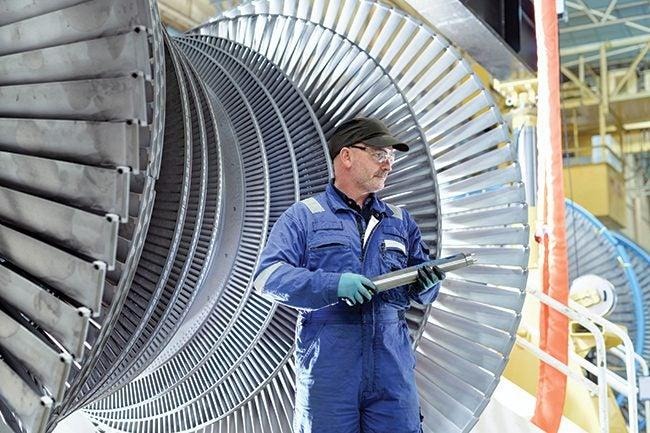

There are extensive maintenance procedures for gas and steam turbines, as well as the generators that go with them. These are referred to as MRO – maintenance, repair, and overhaul operations.
These turbines are usually found in power plants and industrial applications. When optimizing performance and reliability while reducing downtime. It requires the application of good MRO practices.
Understanding MRO
The primary components require periodical inspections through Turbine Repair Services and diagnostics. This is to monitor blade degradation. Also, combustion integrity, control system operation, alignment, and vibration readings.
Major maintenance tasks in the process include hot-gas-path examinations, rotor removal, or restoration. As well as blade replacement or M&R, bearing servicing, upgrades, and component balancing.
Predictive maintenance tools that are all becoming more common in modern processes:
- by means of sensors with data analytics
- electronic technologies for performance modeling
- improved non-destructive testing procedures
- automated inspection
Managing an effective MRO program requires extensive preparation. A tight maintenance plan based on operation hours must be implemented, and accurate historical data is critical to success.
The program necessitates not only accurate operating data. But it also completes documentation of all past actions and inspection results. Meanwhile, a robust components system for managing inventory is also essential to the process.
Vibration Analysis – Vital Diagnostic Tool
This is one of the most useful advanced diagnostic tools. At the highest degree, it entails monitoring the vibration levels. As well as frequencies observed in machinery, and using that data to assess component health.
In the past, vibration analysis was largely used to find mechanical flaws in rotating equipment and assess their severity. Thus, permitting repairs to be performed in a planned and scheduled way to reduce unscheduled downtime.
There is certainly a benefit in that. Know that in today’s world, online as well as wireless monitoring. These enable engineers to be preventive rather than reductive. Of course, by identifying problems before they become failures.
Many suppliers are now incorporating AI into their processes – click https://www.eesi.org/briefings/view/092525ai for more info. Rather than waiting for a malfunction to be found by using a route-based methodology and a handheld portable analyzer. The sensors can give data to programs that use AI and ML algorithms to continuously hunt for anomalies.
The greatest value is obtained by recognizing moments during performance. That’s when the equipment is run outside of its stable state parameters. Also, including at startup or another upset event. And then, altering procedures to reduce such hard-on-equipment periods.
More Game-Changing Technologies
3D scanning changed repair and part replacement. They’re using this technology when it comes to reverse engineering. Know that we can generate precise digital models of components. Thus, enabling rapid reverse engineering and custom part manufacture.
Other novel tools for inspection are also providing value. We have advanced techniques for imaging. Such as X-ray inspection, phased-array ultrasonic testing, as well as thermographic inspection.
These provide extensive information about component integrity without the need for additional disassembly. These approaches offer unprecedented accuracy in detecting cracks, wear, and various concerns. Therefore, it saves inspection times and optimizes repair planning.
Robotics has made maintenance work in difficult-to-reach regions easier. Some companies claim that their generator robot carries out full generator checks without removing the field. These have enabled the entire power business to provide more precise, faster, and cost-effective services.
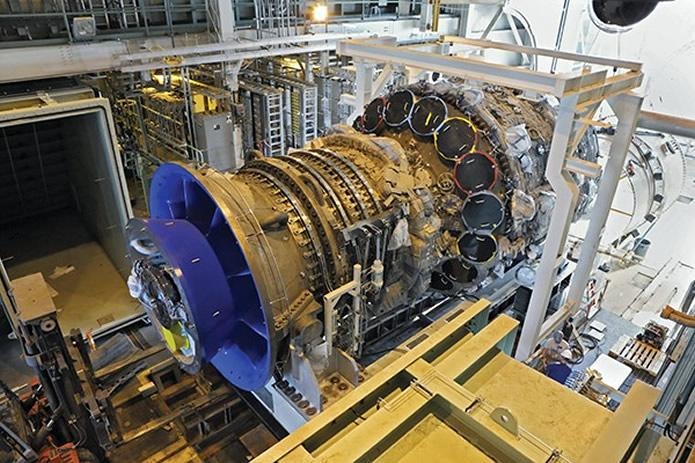
Relying on Experts
Sometimes normal checks fail to yield simple answers, and more complex difficulties occur. Therefore, speaking with experienced engineers who work on turbine MRO projects might be beneficial.
This is because they frequently employ a systematic, multidisciplinary approach to identifying complicated issues. And they may have encountered a similar problem at another facility.
Experts excel in addressing these difficulties. It’s achieved by combining cutting-edge technology with a methodical approach. They do these to discover root causes and develop successful solutions. No wonder Texas produces more energy than other states – read more about this development.
At times, regular inspections fail to discover the source of a problem. So, they conduct a thorough investigation of the performance data, operating history, and M&R records. Next, they use modern diagnostic techniques that are targeted to the identified problem.
Aging Equipment
The increasing lifespan of existing turbine fleets has fundamentally altered maintenance procedures. Thus, resulting in a move from reactive maintenance to proactive as well as predictive methods.
Older equipment faces unique issues such as material fatigue, outmoded designs, and restricted accessibility to OEM parts. These necessitate new and personalized solutions.
Because of design obsolescence, aged fleets frequently struggle to find compatible replacement parts. To remedy this, professionals use reverse engineering.
This is done to create unique components that meet or exceed the original specs. This not only guarantees compatibility. But also increases the operational life of older equipment.
Extending Component Lifetimes
Elevated temperatures have a significant impact on GT components. They’re causing cracks, rusting, thickness of walls, and material condition.
Overhaul upgrades can extend a part’s life by decreasing its degradation and increasing its effective service life. Operators can save significantly by using lower-cost refurbished spares rather than new parts.
Each component was evaluated in its original condition as well as after it had been heat-treated after repair. Enhancements in the alloy’s mechanical properties were assessed.
This is to determine whether the two sets were suitable for lifelong extension repair. The crew used techniques to extend the components’ usable life.